Wednesday, 27 November 2013

When someone robs you it can take a while to get back into things . . . .

It's taken me a week to get things back into shape since my home was burgled. During that time we've had the usual avalanche of verbal prognostications from Washington. Ben Bernanke once again managed to have the economic cognoscenti tripping over themselves trying to pick the next move of the Fed. Of course what we all know now is the Fed is quite simply on hold until early 2014. That leaves markets with little to do but to continue an upward move until told otherwise. We are now entering a very dangerous phase in the current bubble and it's worth looking at a few things.

This week's housing numbers from the US should help the Fed move on at the appropriate time from QE-infinity.  The S&P/Case-Shiller Home Price index showed a move up by 13.3% from a year earlier. Building permits in U.S. were up  6.2% in October to five-year high.


Housing, along with employment is central to the Fed starting to taper. Investors need to keep an eye on Case Schiller as it's my belief any weakness will be jumped on by the uber-doves at the Fed to backslide. 


On another matter investors need to note that volatility is extremely low. This blog remains of the view that we are currently seeing a a good short term buying opportunity in volatility indices. Take for example the Eurostoxx VIX and the S&P500 VIX:


Both of these indices remain at multi year lows due to the fact that the Fed and ECB basically limit their ability to move higher for extended periods by effectively selling a free put to the market via QE. Thus every time the markets try to move down a wall of money dampens the effect. If you believe that QE in the US gets scaled or tapered in (say) March one could expect the breadth of the markets moves to increase and with it volatility.

This blog likes to go back to basics when inflexion points, such as a Fed taper seem to be getting closer. Below is a chart of the S&P500 v. the Put/Call ratio on the CBOE. The thing to note is that although there was a blip up last week in the ratio indicating that there were investors in the market looking to buy protection for their portfolios. The converse is that said ratio remains reasonably low and indicates to me investors are almost "sleep-walking" their way to record highs. This of course spells danger; if not for the implicit "Bernanke Put" an move downward would be magnified. Investors should keep a close watch on this ratio, noting that the lower the ratio moves indicates the greater the complacency in the market in respect to the current market levels.


A friend called me earlier today to say he was looking at a retailing opportunity in the bicycle space. He's a pretty dry character when it comes to due diligence and therefore is far better qualified to look at the sector then someone like me who's passionate about the sport. I gave him my general views about shops and retailers I've dealt with. Both of us agreed that in terms of time v. cost there's something missing in the bike servicing area. As I said recently I've never felt like I've been over-charged by a bike shop for a service. It seems ludicrous to me that somewhere between $80 - 100 gets you a good service that usually gets you on the road without any problems, which I consider to be a bargain now days. Add to this the fact there's a shortage of bike mechanics and you wonder why the price point isn't under more upward pressure. It all reminds me of the growth in high end watches and the restricting factor that is the lack of watch makers. As an example Rolex actually started an academy system in the US where they helped graduates setup shops. They literally trained you and wrote you a cheque knowing that if they couldn't meet the servicing demand consumers would drift away to cheaper more easily maintained time pieces. Perhaps we'll see the major manufacturers of bikes do the same thing? Think about it this way; you hand over your $3000  for a mid-range carbon frames bike. The experience is great until you hear a click in the bottom bracket or have a derailleur that gets out tune. If the mechanic you take it to doesn't fix it you start to think this bicycling thing is nuts . . . the result is one expensive dust catcher in the garage.

My Cannondale has been making some odd noises. The most obvious adjustment has been the headset. Readers will know that I've always had the odd issue with headsets and find the lack of science involved with adjusting them to be somewhat puzzling, especially because carbon framed bikes are quite precise in terms of the distribution of forces within the components and frame. In my case I've tightened the headset cap in the usual manner; try an eighth of a turn, ride, test and adjust again. Here's video from GCN showing how to adjust the cockpit on a carbon framed bike:


The thing to note here is the way he tightens the various bolts a little at a time so as to not focus all the forces on one small area. You see most of these type of components work to spread the load across the frame etc. Also note the use of a proper torque wrench. I've said it before, but it's worth repeating . . . buy a torque wrench and don't try and skimp on the cost. A$200 wrench will save a $4000 frame etc. You have been warned.

Ciao!

Friday, 15 November 2013

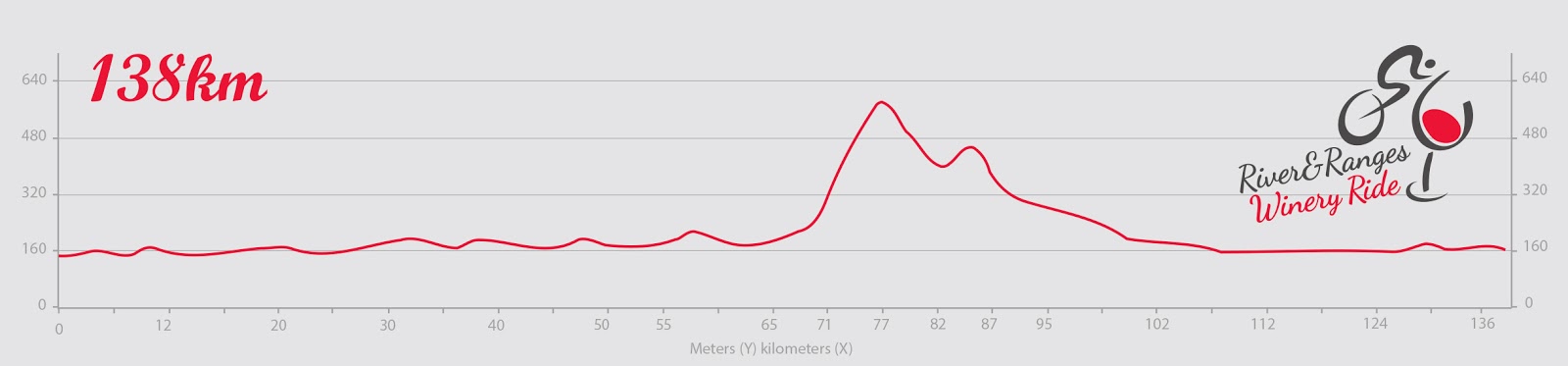
It's only deflation if you don't have money to spend . . . fancy 138km's on a bike?

James Hardie is an Australian building materials company that got into a lot of trouble locally due to asbestos content in some of their products. Now after many years of litigation and struggling against the tide of a slowing housing market globally the company yesterday surprised the ASX when it announced an operating profit of $US108.3 million ($115.9 million) for the six months to September 30, up from $US56.3 million a year earlier. This excludes asbestos, regulatory and liability adjustments, which would put its profit higher at $US194.1 million. It has upgraded its full-year earnings target to between $US180 million and $US195 million. Why do I mention this? Well, Hardie's is predominantly a US housing play now days and for a management team so bearish on the world in general it must be a huge signal that for the first time in many years they are investing in new capacity in the US. Investors know that this blog has for sometime been positive on America, but a data point such as this is good news all around.

Investors should now revisit stocks such as Toll Brothers the upmarket home builder if they wish to leverage this recovery to it's maximum:

"Six years of pent-up demand is just beginning to return to the market," Chief Executive Douglas Yearley said on a call with analysts to discuss the preliminary results.


Toll has underperformed the S&P500 year to date, but is starting to gain momentum. The company is expecting a 65 percent jump in revenue in its just-ended fourth quarter (taking it across the $1 billon threshold for the first time since 2007) and also reported a preliminary 6 percent rise in orders. David Crowe, chief economist at the National Association of Homebuilders, said 12 percent of houses sold in the United States this year to date cost $750,000 or more. Last year, the number was 9 percent. Toll Brothers said it expected its average selling price to have risen 21 percent to $703,000 in the three months to Oct. 31 meaning they are now in the sweet spot. 

If Toll brothers and Hardie is telling you demand exists in the worlds biggest economy, what then does the fact that Global gold demand fell to a four-year low in the third quarter tell us? Certainly it implies that inflationary expectations are low at the moment.

Gold demand was 869 tonnes between July and September, according to data published by the World Gold Council. There was a collapse in demand from India, traditionally the world’s largest consumer of gold (likely to now be overtaken by China) due to a series of government restrictions on gold imports. Said imports fell 32 per cent over the quarter to just 148 tonnes, the lowest since early 2009. Indians hold over 1trn in gold currently and it basically sits in banks and temples gathering dust. The problem is that the Indian currency has been under pressure, which forces up the prices of imports (especially energy), draining the governments reserves due to their subsidising of key fuels. The more gold they import, the more INR has to be sold to pay for it and the greater the pressure on the central government.


This is a problem for investors in all emerging markets. The gold restrictions demonstrate the ability of governments to legislate you out of returns. For example, being short INR is no longer an easy position to hold when the government takes this sort of action. Of course for India it may end up being a good thing. India is not in the same league in terms of exports as China, rather it's about demand and a low INR and middling growth is not going to help the world economy. If India could unleash a third of it's gold reserves this blog is of the view that Asia as a whole would benefit considerably. Investors should watch this situation closely.

As it's Friday and this is a short end of week blog I want to mention that a friend of mine has reminded me about the Orica-Greenedge Winery Ride on December 1st at Mitchelton Vineyard in norther Victoria. I looked up last years event on Strava and looks to be around 1500m of climbing in one big block. Other than that it's flat and should be fun.


I'd like to do it, but it's one long drive to get there and at this late stage it's a bit hard to get a partner. One thing I learnt about riding sportives in Australia when I went to the Wiggle Classic in the Hunter that the riders don't seem patient or organised enough to form mini pelotons and help each other as they do in Italy and Switzerland. People are friendly, but the mass ride thing is still reasonably new to the great majority of riders here, so I guess that will change over time.

Ciao!